THE ART OF CHOOSING THE PERFECT MOROCCAN RUG
HOW TO FIND PERFECT (MOROCCAN) RUG
Rugs are our passion — a craft we’ve mastered through real experience. We’ve driven tens of thousands of kilometers across Morocco, meeting nomads and Berber families along the way, learning directly from the Berbers and Nomads who have been weaving these extraordinary rugs for generations. It’s an honor to share that knowledge with you, so you can feel confident and inspired when choosing your own rug. A Moroccan rug is much more than just a decor item — it’s a mood-setter, a storyteller, and often a lifelong companion. If you’re looking for true quality and longevity, an authentic Moroccan rug is a timeless investment.
Genuine nomad rugs are for those who appreciate the authenticity and timeless design, and who value quality, sustainability and individuality. The kind you fall in love forever. A genuine handmade rug not only lasts — it retains and even appreciates in value.
The appreciation for handwoven rugs and carpets is growing rapidly around the world. More than ever, a rug reflects its owner’s personality, values, and aesthetic. It’s no longer just a decorative element — it’s the soul of a space.
FINDING THE PERFECT RUG IS NOT JUST A PURCHASE — IT’S A THOUGHTFUL PROCESS
The first step is to consider the purpose of the rug. It should be proportionate to the space. Too small, and it can make a room feel disconnected and unfinished. Choose a rug that’s slightly larger rather than too small, so it draws the furniture together and grounds the space.
The material and craftsmanship determine how a rug looks, how it wears, and how it ages. Does it become dull quickly? Or does it develop a beautiful patina over time? Can it withstand everyday life — and perhaps even be passed down to future generations? When you choose a rug that’s been professionally handcrafted using high-quality materials, you’re investing in beauty and durability. Such rugs are easy to maintain, age gracefully, and bring warmth and elegance for years to come. They’re also a responsible choice. A high-quality natural wool is fresh and shiny. Wool that is dyed with natural colors and hand-spun is deep in colors and enduring in every day life.
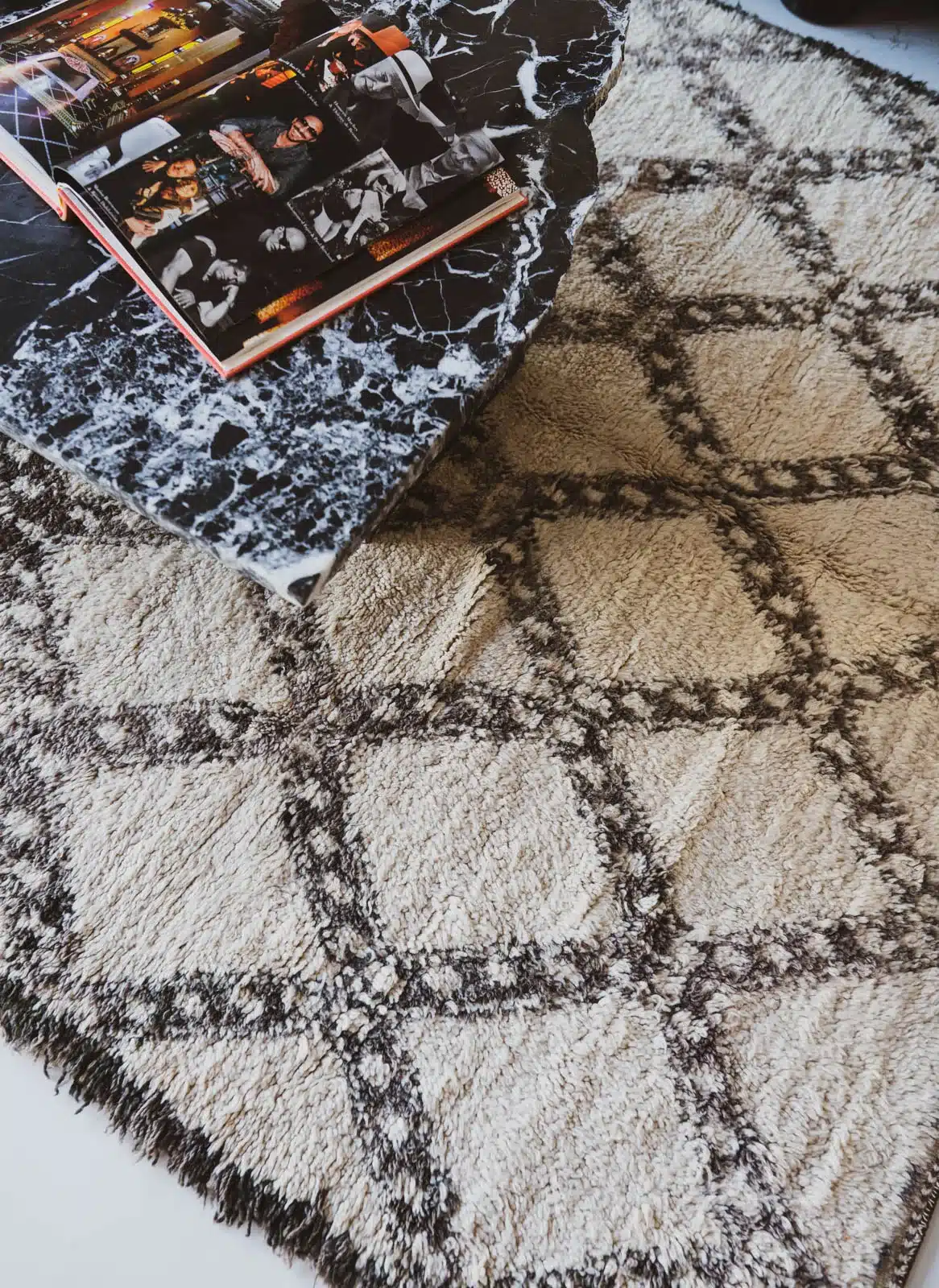
Moroccan rugs come in a wide range of colors, patterns, and styles — many of them named after the Berber tribes that originally wove them. You’ll find everything from subtle, minimalist designs to more abstract, artistic, and bohemian expressions. The key is to find one that speaks to you. Often, when you see the one, you just know.
When choosing a Moroccan rug, always favour natural, chemical-free materials. They are more durable in use and kinder to the environment. One of the best examples is unprocessed wool, which naturally contains lanolin – a type of grease that protects the wool and repels dirt, so it’s easy to keep fresh and clean even in public spaces. That’s why wool is the preferred material for many when investing in a long-lasting, beautiful rug. Vintage rugs and those made from recycled textiles are also excellent choices. They not only have a smaller carbon footprint but are often easier to care for. Boucherouite rugs, for instance, can usually be water-washed in home, making them ideal for high-traffic areas like hallways, kitchens, and children’s rooms.
THE ART OF BERBER RUGS: TRADITION, CRAFTSMANSHIP AND IMAGINATION
Berber rugs are made by the Berber (Amazigh) women of different tribes/regions. Berbers call themselves Amazigh which means free men, and there’s this certain ”Amazigh symbol” a.k.a the free men.
Each Berber tribe and family has its own distinctive style and have a rich cultural heritage passed down through generations. There are multiple Berber tribes/regions and the rugs are named after them. Tribes and families have their own often recognizable styles making rugs. Berber rugs are made out of long-tailed Berber sheeps wool. The higher sheep lives the better wool is. The Berber rugs are woven using wool from long-tailed Berber sheep, which graze freely in the Atlas Mountains. The higher the altitude, the finer the wool — and that wool is among the highest quality in the world. Often compared to cashmere, it’s exceptionally soft, warm, glossy, and luxurious.
Because these rugs are crafted freely and without influence from the Western design world, each piece is one of a kind. Every rug reflects the spirit and imagination of its maker and that’s why we call them pure art.
WANT TO KNOW MORE ABOUT MOROCCAN RUGS? SEE THE LINKS BELOW:
You must be logged in to post a comment.